


After infection and vaccination, whether the body can produce highly effective antibodies depends on whether B cells can "capture" antigens and present them to T cells.
This process appears simple, but in reality involves precise endocytosis, sorting, and degradation. An error at any step may weaken immune protection.
The latest research reveals a key player—the sorting protein SorLA. Like an intracellular "courier sorter," it regulates the uptake and transport of the B cell receptor.
Research Background: How B Cells Present Antigens
B cells recognize antigens through the B cell receptor (BCR) on their surface. After binding, the receptor-antigen complex is endocytosed and enters the endosomal transport system.
Part of the complex is recycled to the cell membrane, while another part enters the lysosome for degradation. The peptides produced by degradation are loaded onto MHC II molecules and presented to CD4+ T cells.
This presentation process determines the quality and quantity of T cell help, directly affecting antibody affinity maturation. Previous studies have identified a large number of transport regulatory factors, but the specific molecular mechanisms remain unclear.
SorLA is a multifunctional sorting protein that has been studied extensively in the nervous system. Whether it can play a similar role in B cells was previously unknown.
Research Objective: Seeking a New Regulator of BCR Transport
This study aimed to answer a core question: Is SorLA involved in antigen uptake and intracellular transport in B cells?
The researchers used CRISPR-Cas9 technology to knock out the SORL1 gene and systematically evaluate its effect on BCR function. The experiments covered human B cell lines and mouse primary B cells, advancing layer by layer from the molecular to the whole-animal level.
The study also constructed genetically modified mice and bone marrow chimera models to verify the physiological role of SorLA in vivo.
Research Methods: Multi-Level Systematic Validation
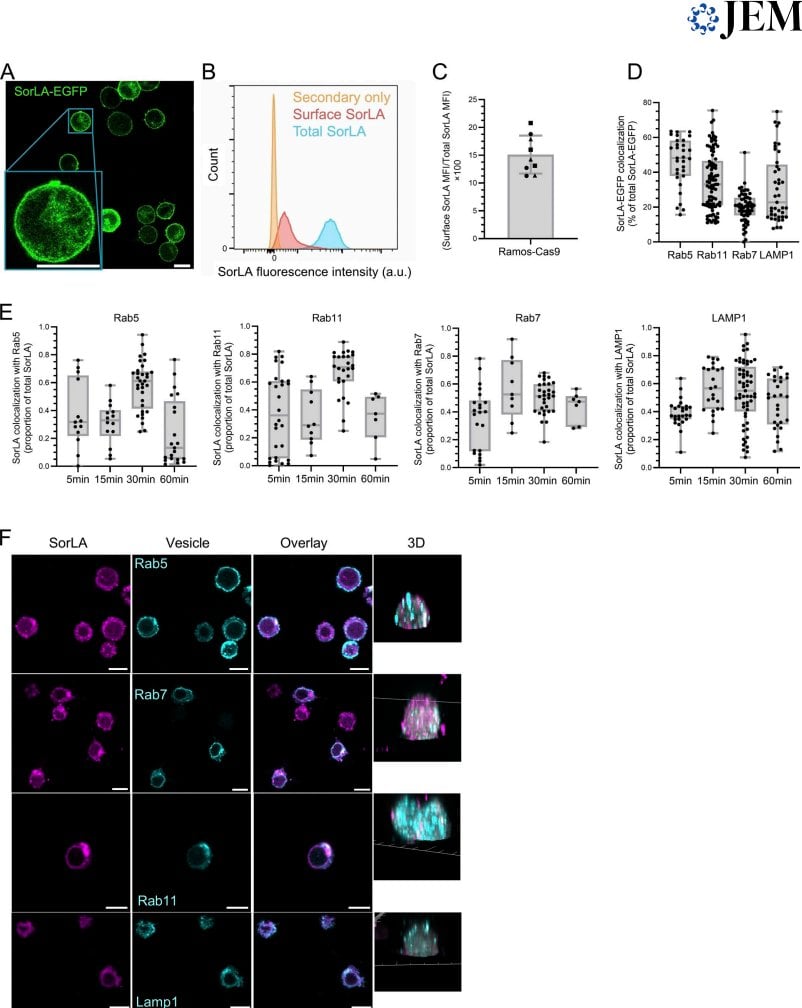
The researchers first confirmed the localization of SorLA in B cells. The results showed that approximately 15.6% of SorLA was located on the cell surface, with the remainder distributed in endosomal compartments.
Through colocalization analysis, they found that SorLA overlapped to varying degrees with early endosomes (Rab5+), recycling endosomes (Rab11+), and lysosomes (LAMP1+). This suggests that it participates in the entire transport process of the BCR-antigen complex.
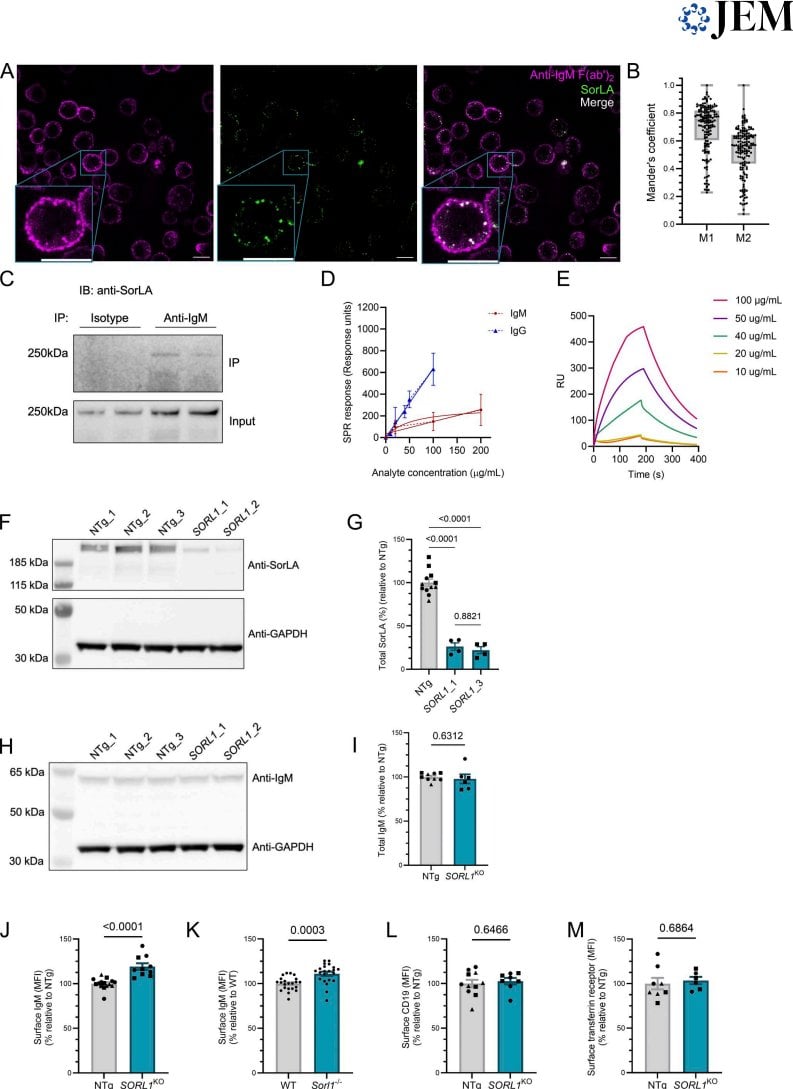
Functional experiments showed that after knocking out SORL1, B cell uptake of both soluble antigens and membrane-bound antigens was significantly reduced. However, endocytosis of the transferrin receptor was unaffected, indicating that the defect is BCR-specific.
The researchers also established cell lines expressing HIV broadly neutralizing antibody BCRs and combined immunopeptidomics to analyze the spectrum of presented antigen peptides.
Core Findings: SorLA Deficiency Weakens Humoral Immunity
SorLA deficiency led to elevated BCR levels on the B cell surface, but total BCR expression remained unchanged. This suggests that the endocytosis or degradation step is impaired.
BCR degradation experiments confirmed that SORL1 knockout cells degraded receptor-antigen complexes with markedly lower efficiency. The number, morphology, and acidification degree of lysosomes were all normal, ruling out functional defects in the lysosomes themselves.
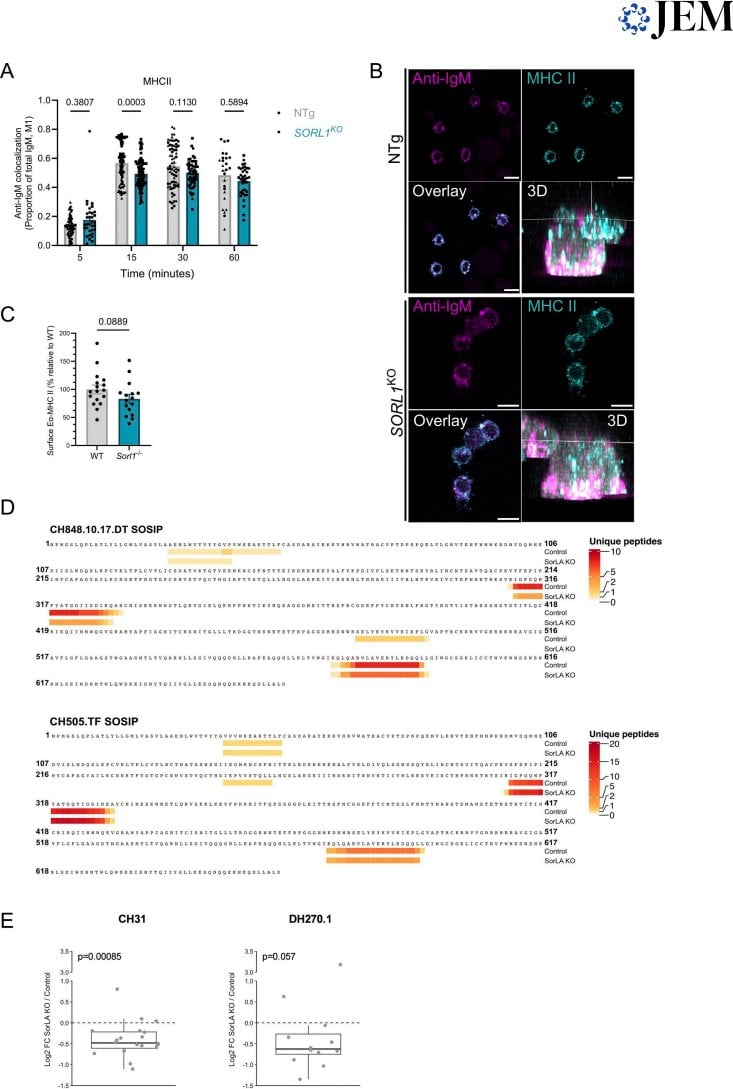
At the level of antigen presentation, SorLA deficiency led to a reduction in MHC II-antigen peptide complexes. Immunopeptidomics further showed that although the types of presented peptides remained unchanged, their overall abundance decreased.
The in vivo experiments were the most critical. After immunizing mice, SorLA-deficient mice showed significantly reduced numbers of germinal center B cells and plasma cells. Low-affinity IgM antibody levels were normal, but high-affinity IgG1 antibodies were markedly reduced, and affinity maturation was delayed.
Innovations and Breakthroughs
This study links SorLA to B cell immune function for the first time. Previous understanding mainly focused on its role in neurodegenerative diseases.
The study demonstrates that SorLA directly binds to BCR and regulates its endocytosis and sorting. This "moonlighting" function expands people's understanding of the role of sorting proteins in the immune system.
Another highlight is the application of the immunopeptidomics method. The researchers not only looked at the amount presented, but also analyzed the "quality" of the presented peptides, finding that SorLA does not affect the types of peptides, only their quantity.
Practical Significance: A Bridge from Basic Science to the Clinic
Abnormal B cell function is associated with a variety of diseases, including immunodeficiency, autoimmune diseases, and B cell malignancies. Understanding the regulatory mechanisms of BCR transport may provide new targets for these diseases.
SorLA expression is elevated in B cell malignancies, suggesting that it may be involved in the survival or proliferation of tumor B cells. In the future, intervention strategies targeting this pathway may be explored.
In addition, vaccine development relies heavily on effective antibody responses. If the SorLA pathway can be modulated, it may become a new approach for enhancing vaccine immunogenicity.
Summary and Reflections
This study reveals a new identity for SorLA as a regulator of BCR antigen transport. By affecting antigen uptake, degradation, and presentation, it ultimately shapes the quality of the humoral immune response.
From sorting protein to immune regulation, the research once again demonstrates the profound impact of the intracellular transport system on immune function. A molecule well known in the nervous system plays a completely different role in immune cells.
This reminds us that "old molecules" in basic research can often bring "new stories." The question is: How many other transport proteins like SorLA are quietly regulating our immune defense? What roles do they play in autoimmune diseases and tumor immunity? The answer may be hidden in the next seemingly "already known" protein.