


Solar ultraviolet radiation is the primary cause of skin cancer—this is already consensus. But a key question has long remained unresolved: after ultraviolet radiation causes melanocytes to produce large numbers of gene mutations, why are these "bad cells" not promptly cleared by the immune system?
A recent study published in Immunity offers a new explanation. Scientists found that ultraviolet irradiation activates the MITF transcription factor within melanocytes, which in turn upregulates PD-L1 expression, holding up an "immune protective umbrella" for mutated cells.
Research Background: The Mystery of "Immune Evasion" by Mutated Cells
Ultraviolet irradiation induces melanocytes to produce large amounts of DNA damage and gene mutations. Theoretically, these abnormal cells should be recognized and cleared by the immune system, preventing their progression to tumors.
However, the clinical incidence of melanoma remains high. This indicates that mutated melanocytes have found some way to successfully evade immune surveillance.
PD-L1 is one of the most commonly used "immune brake" molecules by tumor cells. It can bind to PD-1 on the surface of T cells, inhibiting T cell killing activity. But how melanocytes regulate PD-L1 was previously unclear.
Research Objective: Finding the Bridge Between Ultraviolet Radiation and Immune Tolerance
The research team hoped to answer a specific question: after ultraviolet irradiation, which molecular pathways within melanocytes drive PD-L1 expression?
They focused on MITF—the most central transcription factor in the melanocyte lineage. MITF controls the development, differentiation, and survival of melanocytes, and is also closely associated with the occurrence of melanoma.
A bold hypothesis was: MITF not only maintains melanocyte identity, but may also directly regulate PD-L1 transcription, thereby influencing the immune system's response to mutated cells.
Research Methods: From Cells to Humanized Models
To verify this hypothesis, the researchers designed a multi-layered experimental system.
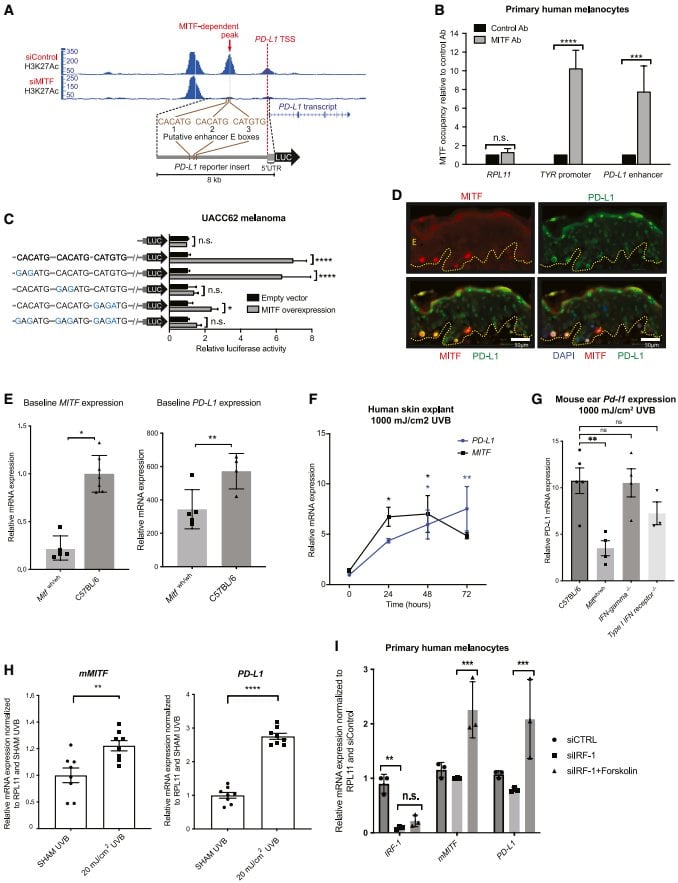
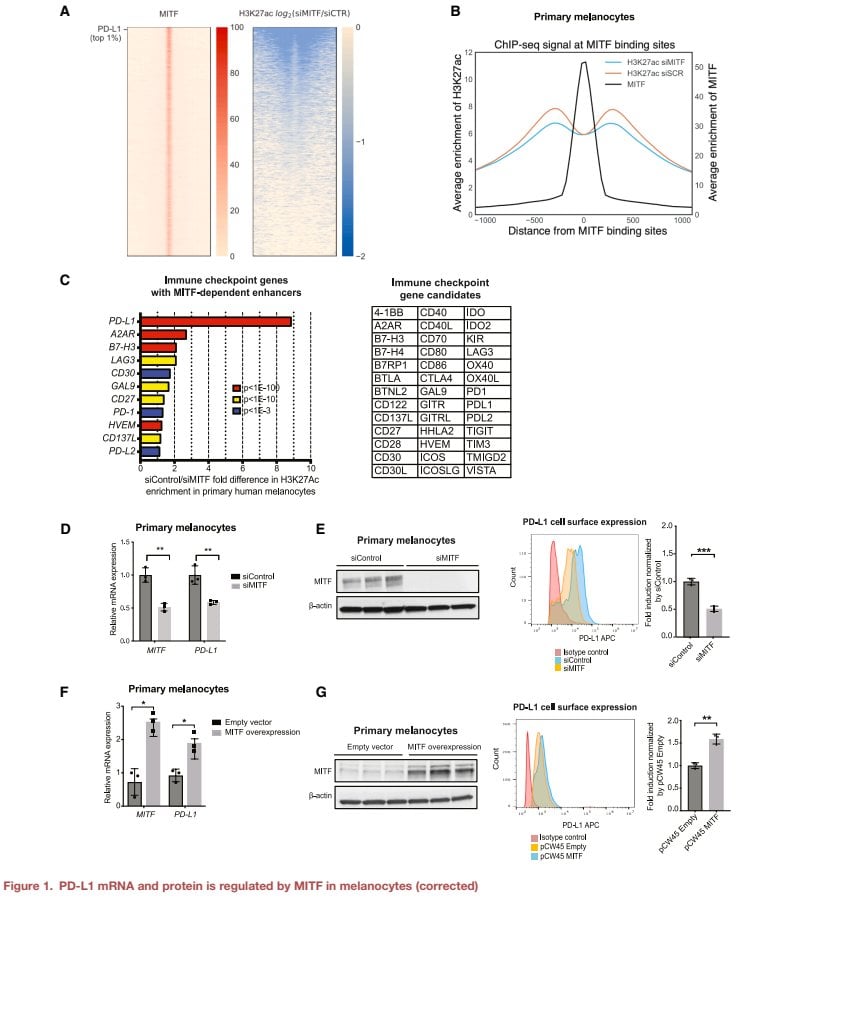
First, in human melanocytes and melanoma cell lines, through gene editing and overexpression experiments, they examined the effects of MITF on PD-L1 mRNA and protein levels. Second, using chromatin immunoprecipitation sequencing, they searched for MITF binding sites at the PD-L1 locus.
Furthermore, the research team constructed a PD-L1-deficient mouse model to observe skin immune responses after ultraviolet irradiation. Finally, they used melanocytes differentiated from human induced pluripotent stem cells to construct a humanized skin graft model, validating the findings in vivo.
Core Findings: Ultraviolet Radiation Turns On the PD-L1 Switch Through MITF
The experimental results clearly supported the initial hypothesis. After ultraviolet irradiation, MITF activity in melanocytes was significantly elevated and directly bound to an enhancer region upstream of the PD-L1 gene, driving PD-L1 transcription.
This regulation is lineage-specific—MITF exists only in the melanocyte lineage, so this mode of PD-L1 induction is not seen in other skin cell types.
Functional experiments were even more convincing. When melanocytes lacked PD-L1, ultraviolet irradiation triggered vitiligo-like skin depigmentation—a result of T cells attacking melanocytes.
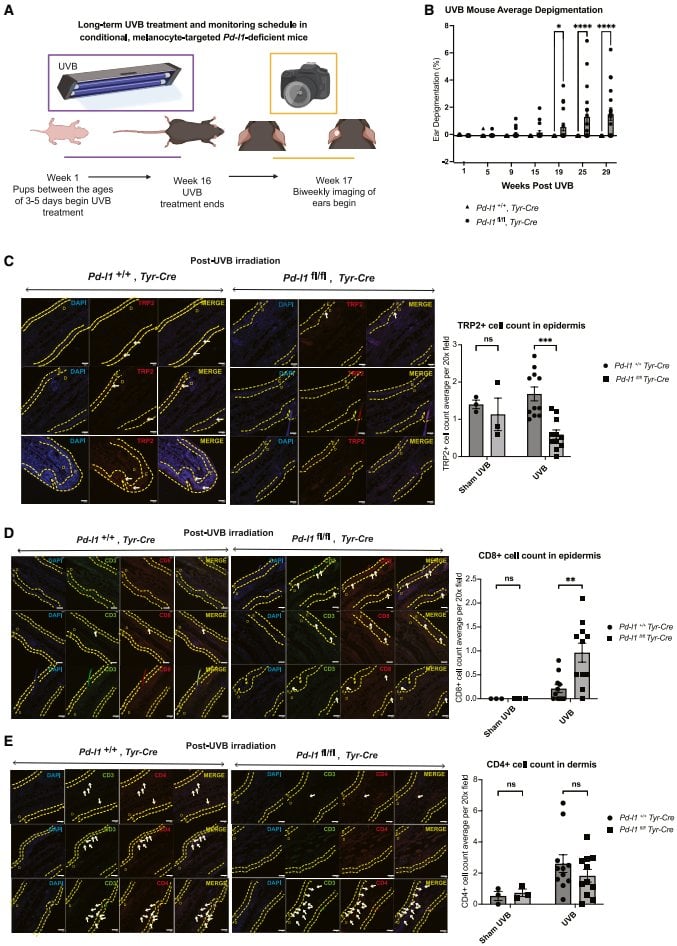
The humanized skin graft model further confirmed: melanocytes lacking PD-L1 were more susceptible to killing by CD8+ T cells. In the absence of ultraviolet irradiation, however, PD-L1 deficiency did not cause an obvious immune response.
Innovations and Breakthroughs: Providing a New Explanation for "Mutation Tolerance"
The core value of this study lies in revealing a direct molecular link between ultraviolet-induced mutations and immune tolerance.
In the past, it was thought that mutated cells primarily survived by randomly acquiring immune evasion capabilities. This study shows that ultraviolet radiation itself can actively activate an immunosuppressive pathway—this is more like a programmed protective response rather than an accidental event.
Another highlight is the concept of lineage specificity. MITF, as the identity transcription factor of melanocytes, directly couples the two processes of "cell identity" and "immune tolerance." This suggests that cells from different tissue origins may utilize their own unique transcription factors to establish different immune tolerance mechanisms.
Practical Implications: From Skin Protection to Tumor Therapy
For clinical practice, this discovery has multiple implications. At the level of skin cancer prevention, understanding how ultraviolet radiation induces immune tolerance helps in developing more precise intervention strategies.
For melanoma immunotherapy, the discovery of the MITF-PD-L1 axis provides a new potential target. If this pathway can be blocked in the early stages of tumors, it might enhance the immune system's ability to clear mutated cells.
In addition, this study established a complete research paradigm from gene-edited cells to humanized graft models. This approach is worth emulating—using lineage-specific transcription factors as an entry point to explore the immune regulatory networks of tissue cells.
Summary and Reflections
This study clearly delineates a pathway: ultraviolet radiation activates MITF, MITF drives PD-L1 transcription, and PD-L1 protects mutated melanocytes from T cell attack. This provides an important molecular basis for understanding the mechanisms of ultraviolet-related skin cancer development.
Worth pondering: since ultraviolet-induced PD-L1 helps mutated cells survive, after long-term sun exposure, might the skin already harbor large numbers of "protected" mutant clones? Under what conditions would these clones break through tolerance and truly progress toward malignant transformation? Answers to these questions may change our understanding of the timing of skin cancer prevention.